
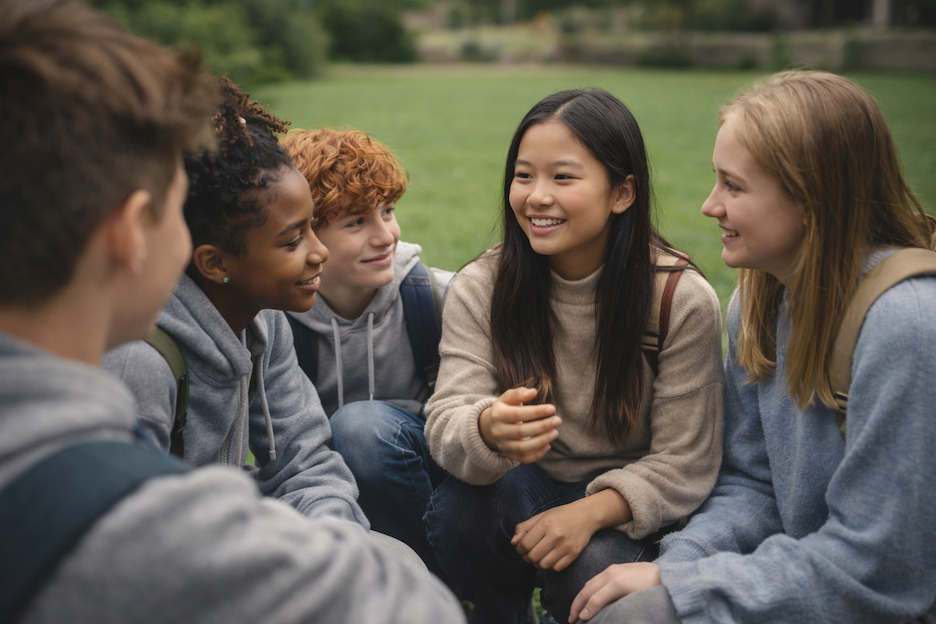
Schools
Supporting adolescents aged 12–18 | wellbeing, self-regulation & learning readiness
At the heart of this work lies the Be Your Own Best Friend philosophy — learning to relate to yourself with awareness, compassion, and responsibility. When adolescents learn to understand their inner world, regulate stress, and respond rather than react, they build a foundation they can rely on throughout life.

Adolescence is a formative phase in which young people develop identity, autonomy, emotional regulation, and relational skills. In a context of increasing academic pressure, social complexity, and emotional challenges, wellbeing, self-regulation, and psychological safety are not optional, they are foundational conditions for learning and healthy development.
I work with adolescents aged 12–18 within educational contexts, supporting them in developing emotional resilience, self-awareness, healthy communication, and respect for diversity. The work aligns naturally with mentoring, pastoral care, wellbeing frameworks, and student support structures.
The programme: I Make the Difference | Experiential wellbeing training
I Make the Difference is an experiential training programme designed specifically for adolescents. It supports young people in taking responsibility for their inner state, behaviour, and choices, at school and beyond.
Rather than focusing on problems or performance alone, the programme creates the conditions in which adolescents can learn, grow, and participate from a grounded, regulated, and resourceful place.
The training supports participants in:
developing self-awareness and inner stability
recognising and regulating stress
improving communication with self and others
understanding and respecting differences
strengthening psychological safety and group cohesion
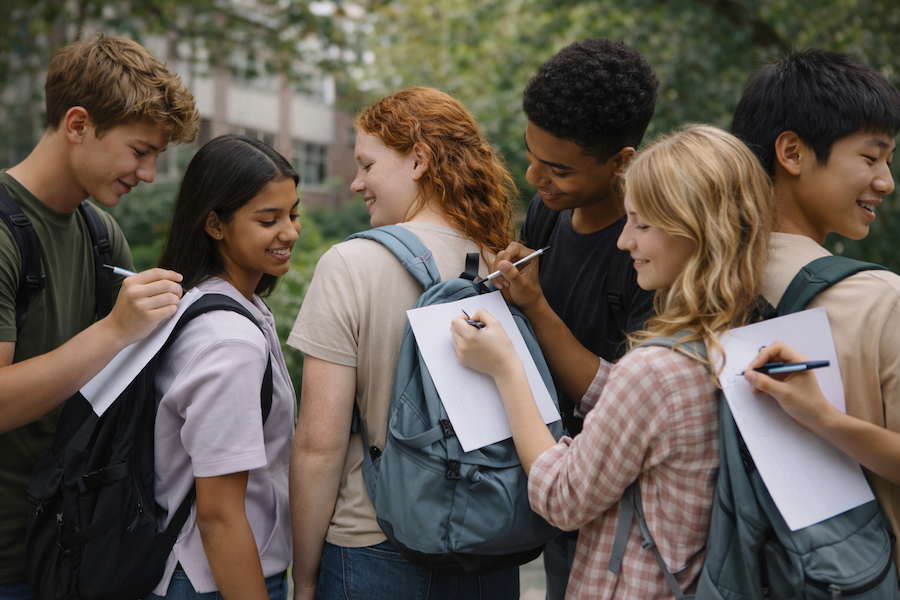
Why this matters
Psychological safety & adolescent development
Research and practice show that wellbeing and psychological safety are prerequisites for sustainable learning. When adolescents experience chronic stress or feel unsafe, the nervous system shifts into survival mode, limiting focus, reflection, empathy, and learning capacity.
By working with nervous-system awareness, attention, communication, and perspective-taking, adolescents learn to:
recognise stress responses and return to a regulated state
make more conscious choices
take responsibility for their behaviour
feel safer and more confident within groups
Wellbeing is therefore not a “soft” topic, but a core condition for learning, development, and resilience.
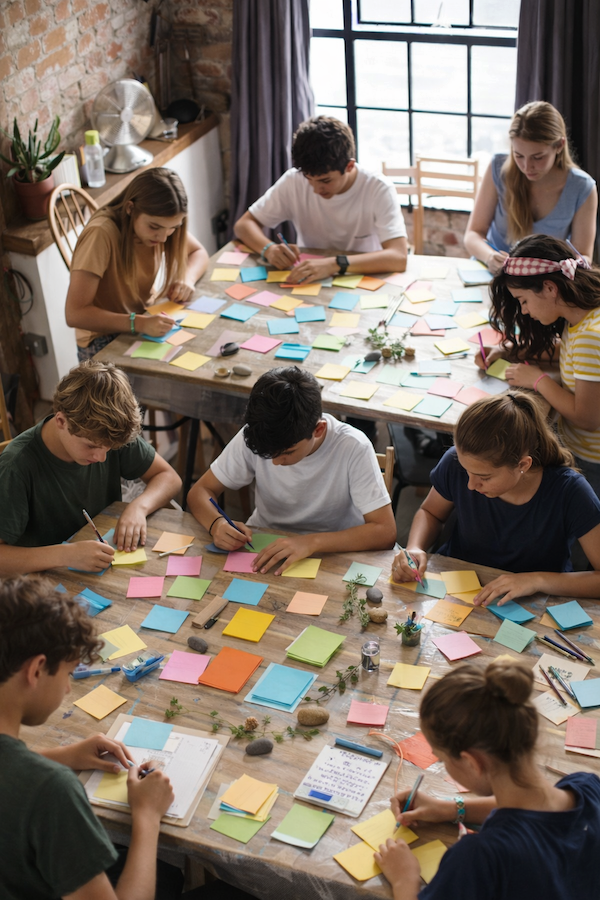
Structure & practical details | Format, age range & delivery
Age group: adolescents aged 12–18
Indication group size: 12–14 participants
Language: English or Dutch
Format:
6 modules of 90 minutes, spread over several weeks
or 3 half-day sessions of 3 hours
Approach: experiential, interactive, playful and reflective
Tools & models: NLP- and somatic-based
Levels: adaptable to different educational and developmental contexts
A tailored quotation is provided upon request.
What educational partners notice | Outcomes observed in practice
Educational partners report that the programme supports adolescents in:
developing safer and more connected group dynamics
improving focus and learning readiness
strengthening ownership and responsibility
building a shared language around wellbeing, behaviour, and communication
The impact deepens when educators are able to connect to the themes and language introduced in the training.
“To be yourself in a world that is constantly trying to make you something else is the greatest accomplishment.”
Ralph Waldo Emerson
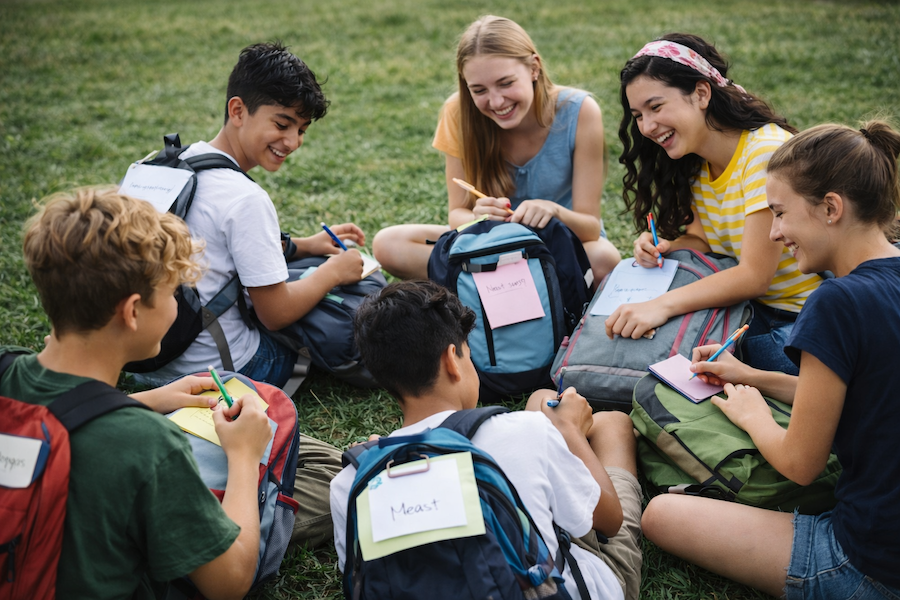
Working together | Integration within educational settings
I collaborate closely with educators, pastoral teams, counsellors, and leadership to ensure the programme integrates smoothly into existing wellbeing and educational structures.
Safeguarding & duty of care
All work with adolescents takes place within established safeguarding and duty-of-care frameworks, in close collaboration with responsible professionals. Prefer to connect by email? Get in touch here
Reviews
-
![The flag of the Netherlands with horizontal stripes of red, white, and blue.]()
Bij deze doelgroep van 16 jarigen is het niet eenvoudig een veilige sfeer te creëren. Dit is uitstekend gelukt. Door de inzet van zeer diverse opdrachten is het gelukt een sfeer te creëren waar sprake is van veiligheid en onderling respect en daarmee een gezond leerklimaat.
- Marisa Giunta d'AlbaniMarisa Giunta d'Albani
-
![The flag of Spain, featuring three horizontal stripes: red, yellow, red, with the yellow stripe being twice as wide and displaying the Spanish coat of arms.]()
Since 2019 Christie has been coaching my teenage son, helping him strengthen his confidence and setting up viable lifestyle goals, adapted to his current needs. As a mother, I have felt well supported and understood by Christie, who has helped bridge gaps when we’ve got stuck on some mother-son issues. We are very grateful for her support.
Astrid Vargas - Conservationist
-
![The flag of the Netherlands with horizontal red, white, and blue stripes.]()
Christie is een wereld burger letterlijk en figuurlijk. Ze heeft veel kwaliteiten en een ruime liefdevolle begrijpende uitstraling en houding. Ze laat je zijn wie je bent en stelt de perfecte vragen om veder te komen in je denken, inzichten, en waar je wilt zijn met warmte liefde en humor.
She is like a sparkling star
Ze is voor mij dierbaar- Monica - Docent
-
![Flag with three horizontal stripes: red on top, white in the middle, and blue on the bottom.]()
Christie kan zich waarlijk verbinden met zichzelf en de anderen. Ze bezit een innerlijke stabiliteit en gemoedsrust. Ze is helder, dynamisch, kalm en aanwezig. Met haar geduldige gelijkmoedige aanpak is ze een prima bemiddelaar /coach bij je zoektocht naar verbinding en verandering.
Ria - Docent
Leerlingen feedback
Ik weet nu hoe ik me moet focussen
Je leert elkaar beter kennen
Dat je over jezelf leerde en de emotie
Dat je over je zelf gaat nadenken
Heel inspirerend en leerzaam
Ik vond het leuk om te horen wat mensen van me denken